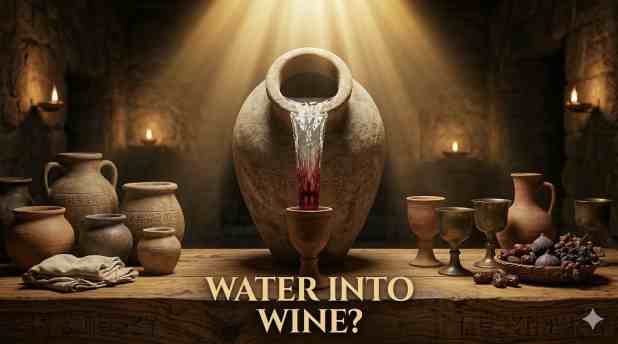
Water into Wine

The Sign Many Did Not See

There are certain events in the Bible that, at first glance, seem simple. A gesture of kindness, an act of compassion, perhaps a small miracle to solve a social problem. The first miracle of Jesus—turning water into wine at a wedding in the small town of Cana—is often understood in exactly that way. A couple was about to suffer public embarrassment because the wine had run out, and Jesus quietly resolves the problem. And then the story seems to end there.

But the Gospel of John rarely tells stories merely to recount events. John does not call the works of Jesus “miracles”. He calls them signs. And a sign does not exist for its own sake. It always points to something greater.

If we look more carefully, we begin to realise that the first miracle of Jesus is not simply about wine. It is about the entire story of creation, the fall, and redemption.

The Gospel of John opens with words that echo something very ancient:“In the beginning was the Word.”

Those words immediately take us to the first verse of the Bible:“In the beginning God created the heavens and the earth.”

John did not choose this language by accident. He wants the reader to understand that when Jesus enters human history, something similar to creation is happening once again.

The world that God had created as good had become a broken world. The light had been overshadowed by the darkness of sin. Yet John announces something extraordinary:“The light shines in the darkness, and the darkness has not overcome it.”

This is not merely the arrival of another prophet. It is the Creator Himself entering His creation in order to restore it.

If we follow carefully the events of the first chapter of John, we notice something intriguing. The evangelist begins to mark time.“The next day…”, the text says.Then again: “The next day…”.And once more: “The next day…”.

Then, when we arrive at the following chapter, we read:“On the third day there was a wedding at Cana in Galilee.”

When we count these days carefully, something remarkable emerges. The wedding takes place on the seventh day of the narrative sequence.

For any reader familiar with the book of Genesis, this is hardly accidental.

In the first creation, God works for six days and, on the seventh, enters His rest. And at the end of the creation story we find a wedding. Adam meets Eve, and human history begins.

Now, in the Gospel of John, the new creation also culminates in a wedding.

During the celebration in Cana, a simple but socially embarrassing problem arises: the wine has run out.

Mary approaches Jesus and simply says,“They have no wine.”

At first glance, Jesus’ reply seems unusual:“Woman, what has this to do with me? My hour has not yet come.”

The word “woman” may sound abrupt to modern ears, but in the biblical context it echoes an ancient language—the language of Genesis.

In Genesis we encounter another woman. She also speaks to the man. But in that story the invitation leads to the fall. The woman tells the man to eat from the forbidden fruit, and human history descends into sin.

Now, in Cana, another woman speaks to a man. But this man is described in the Scriptures as the last Adam.

And this time the result is not a fall. It is the revelation of the glory of God.

John then mentions what appears to be a small detail, yet one full of meaning: there were six stone jars standing there, used for the Jewish rites of purification.

These jars were part of everyday religious life. They were used in ceremonial washings that symbolised spiritual purity.

But Jesus does not ask for new vessels. He uses precisely these jars. He commands that they be filled with water—and then He turns the water into wine.

The gesture is profoundly symbolic. It is as though Jesus were saying that the ancient rituals pointed towards something greater, yet they were never the final destination.

When the master of the feast tastes the wine, he makes a curious observation. He says that people normally serve the good wine first, and later the inferior wine. But in this case, the best wine has been kept until the end.

Those words echo far beyond that wedding celebration.

For centuries the story of redemption had unfolded through the law, the sacrifices, and the ancient covenants. All of these were good, but they were also preparation.

Now something better had arrived.

The wine points forward to something Jesus would later explain at the Last Supper:“This cup is the new covenant in my blood.”

True purification would not come through ritual washings. It would come through the sacrifice of the very Lamb of God.

John also invites us to notice the numbers. There were six jars. The miracle happens on the seventh day.

Six represents human effort—always incomplete.Seven represents the rest of God.

What human effort cannot complete, God completes.

True rest is not found in human works, but in the work of Christ.

There is yet another detail. John tells us that the wedding took place on the third day.

For anyone reading the Gospel as a whole, this expression echoes something that is still to come. On the third day, the Lamb of God would rise again.

Thus, even in the first miracle, John is quietly pointing towards the climax of the story: the cross and the resurrection.

John himself concludes by saying that this was the first of the signs through which Jesus revealed His glory.

The miracle was not merely about wine.

It was a sign that creation was being renewed.A sign that the old order was giving way to something greater.A sign that the Creator had entered His own creation in order to restore it.

Perhaps the most remarkable thing about this miracle is that it does not end at that wedding feast.

The transformation of water into wine is only an image of a far greater transformation.

God did not come merely to transform water.He came to transform human lives.

Darkness into light.Death into life.Sinners into children.

At Cana, the guests tasted an extraordinary wine.But through Christ, the whole world has been invited to something far greater—the new creation.

And, as we discovered at that ancient wedding feast,God truly saved the best until last.

Adivalter Sfalsin
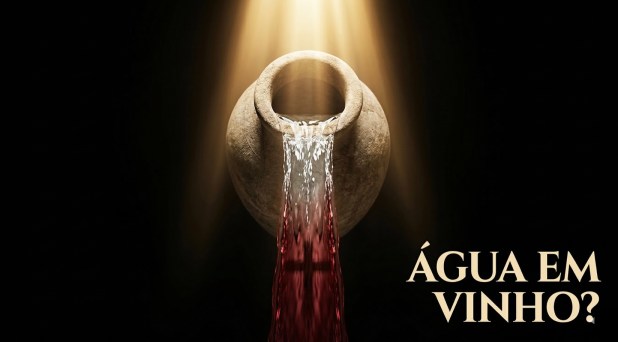
Primeiro Milagre

O Sinal que Muitos Não Viram

Há certos acontecimentos na Bíblia que, à primeira vista, parecem simples. Um gesto de bondade, um ato de compaixão, talvez um pequeno milagre para resolver um problema social. O primeiro milagre de Jesus, transformar água em vinho em um casamento na pequena cidade de Caná, muitas vezes é entendido exatamente assim. Um casal estava prestes a sofrer uma humilhação pública porque o vinho havia acabado, e Jesus, discretamente, resolve o problema. E então a história parece terminar ali. 

Mas o Evangelho de João raramente conta histórias apenas para narrar acontecimentos. João não chama os milagres de Jesus de “milagres”. Ele os chama de sinais. E um sinal não existe por si mesmo. Ele sempre aponta para algo maior. Se olharmos com mais atenção, perceberemos que o primeiro milagre de Jesus não é apenas sobre vinho. Ele é sobre toda a história da criação, da queda e da redenção. O Evangelho de João começa com palavras que ecoam algo muito antigo. “No princípio era o Verbo.” Essas palavras nos levam imediatamente ao primeiro versículo da Bíblia: “No princípio criou Deus os céus e a terra.” João não escolheu essa linguagem por acaso. Ele quer que o leitor entenda que, quando Jesus entra na história humana, algo semelhante à criação está acontecendo novamente.

O mundo que Deus havia criado bom havia se tornado um mundo quebrado. A luz havia sido obscurecida pelas trevas do pecado. Mas João anuncia algo extraordinário: “A luz brilha nas trevas, e as trevas não a venceram.” Não é apenas um novo profeta que chegou. É o próprio Criador entrando na sua criação para restaurá-la. Se acompanharmos cuidadosamente os acontecimentos do primeiro capítulo de João, encontramos algo curioso. O evangelista começa a marcar o tempo: “No dia seguinte…”, diz o texto. Depois novamente: “No dia seguinte…”. E mais uma vez: “No dia seguinte…”. Então, ao chegarmos ao capítulo seguinte, lemos: “No terceiro dia houve um casamento em Caná da Galileia.”

Quando contamos cuidadosamente esses dias, percebemos algo surpreendente. O casamento acontece no sétimo dia da sequência narrativa. Para qualquer leitor familiarizado com o livro de Gênesis, isso dificilmente pode ser coincidência. Na primeira criação, Deus trabalha seis dias e, no sétimo, entra em descanso. E no final da história da criação encontramos um casamento. Adão encontra Eva, e a humanidade começa. Agora, no Evangelho de João, a nova criação também culmina com um casamento. 

Durante a festa em Caná, surge um problema simples, mas socialmente constrangedor: o vinho acabou. Maria se aproxima de Jesus e diz apenas: “Eles não têm vinho.” A resposta de Jesus parece estranha à primeira vista: “Mulher, que tenho eu contigo? Ainda não chegou a minha hora.” A palavra “mulher” pode soar rude aos ouvidos modernos, mas no contexto bíblico ela ecoa uma linguagem antiga, a linguagem de Gênesis.

Em Gênesis encontramos outra mulher. Ela também fala ao homem. Mas naquela história, o convite leva à queda. A mulher diz ao homem para comer do fruto proibido, e assim a história humana mergulha no pecado. Agora, em Caná, outra mulher fala ao homem. Mas este homem é chamado nas Escrituras de o último Adão. E desta vez o resultado não é queda. É revelação da glória de Deus.

João menciona então um detalhe aparentemente pequeno, mas cheio de significado: havia ali seis talhas de pedra usadas para os rituais de purificação dos judeus. Essas talhas faziam parte da vida religiosa cotidiana. Eram usadas em lavagens cerimoniais que simbolizavam pureza espiritual. Mas Jesus não pede taças novas. Ele usa exatamente essas talhas. Ele manda enchê-las de água. E então transforma a água em vinho. O gesto é profundamente simbólico. É como se Jesus estivesse dizendo que os antigos rituais apontavam para algo maior, mas nunca foram o destino final. Quando o mestre da festa prova o vinho, ele faz uma observação curiosa. Ele diz que normalmente as pessoas servem primeiro o vinho bom e depois o inferior. Mas, neste caso, o melhor vinho foi servido por último.

Essa frase ecoa muito além daquela festa. Durante séculos, a história da redenção havia sido construída através da lei, dos sacrifícios e das alianças antigas. Tudo isso era bom, mas também era preparação.Agora, algo melhor havia chegado. O vinho aponta para algo que Jesus explicaria mais tarde na última ceia: “Este cálice é a nova aliança no meu sangue.” A purificação definitiva não viria através de rituais. Viria através do sacrifício do próprio Cordeiro de Deus.

João também nos convida a perceber os números. Havia seis talhas. O milagre acontece no sétimo dia. Seis representa a obra humana, sempre incompleta. Sete representa o descanso de Deus. Aquilo que o esforço humano não consegue completar, Deus completa. O verdadeiro descanso não está nas obras humanas, mas na obra de Cristo. Há ainda outro detalhe. João diz que o casamento ocorreu no terceiro dia. Para quem lê o Evangelho inteiro, essa expressão ecoa algo que ainda está por vir. No terceiro dia, o Cordeiro de Deus ressuscitaria. Assim, já no primeiro milagre, João está discretamente apontando para o clímax da história: a cruz e a ressurreição. O próprio João conclui dizendo que este foi o primeiro dos sinais de Jesus e que, por meio dele, Jesus manifestou a sua glória. O milagre não era apenas sobre vinho. Era um sinal de que a criação estava sendo renovada. Um sinal de que a antiga ordem estava dando lugar a algo maior. Um sinal de que o Criador havia entrado em sua própria criação para restaurá-la.

Talvez o mais impressionante sobre esse milagre seja que ele não termina naquela festa. A transformação da água em vinho é apenas uma imagem de uma transformação muito maior. Deus não veio apenas transformar água. Ele veio transformar vidas humanas. Trevas em luz. Morte em vida. Pecadores em filhos. Em Caná, os convidados apenas provaram um vinho extraordinário. Mas, através de Cristo, o mundo inteiro foi convidado para algo ainda maior, para a nova criação.

E, como descobrimos naquela antiga festa, Deus realmente guardou o melhor para o final.

Adivalter Sfalsin